What Is Reserve Fuel Capacity, and How Far Can a Car Typically Go Once the Fuel Gauge Shows Empty?
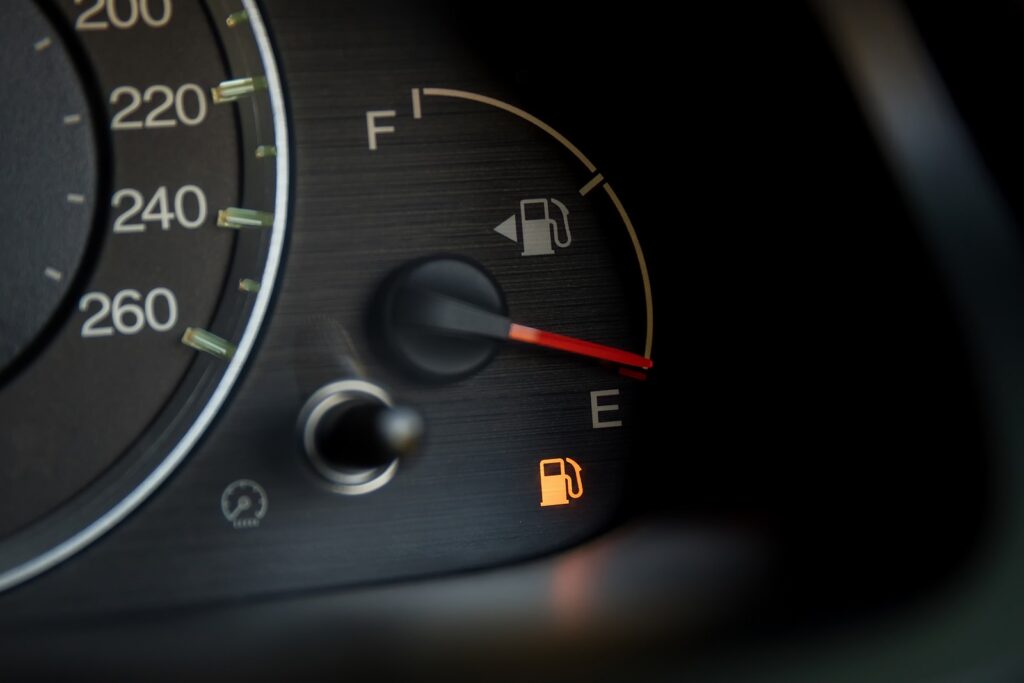
Reserve fuel capacity is the small amount of fuel remaining in your tank after the low-fuel warning light turns on or the gauge reads “empty.” It’s designed to give drivers a short buffer to reach a gas station without immediately stalling. In most modern vehicles, this reserve equals roughly 10–15% of the tank’s total capacity—about 1–3 gallons of fuel and an additional 20–50 miles of driving, depending on vehicle type and fuel efficiency. For Nevada drivers traveling long stretches between Las Vegas, Reno, and rural areas, understanding your vehicle’s reserve capacity isn’t just helpful—it can be a safety issue.
Key Takeaways
- Reserve fuel capacity is a safety buffer, not an invitation to keep driving
- Most vehicles trigger the low-fuel warning when 10–15% of the tank remains
- Typical reserve range is 20–50 miles, depending on vehicle type and driving conditions
- Nevada’s remote highways make running out of fuel especially dangerous
- Regularly driving on reserve damages fuel system components and shortens fuel pump life
- Extreme heat affects both fuel efficiency and reserve fuel calculations
What Reserve Fuel Capacity Really Means
Despite the name, reserve fuel capacity usually isn’t a separate tank or compartment. Instead, it’s simply the final portion of fuel in your main tank that remains after the gauge reads empty or the warning light illuminates. Automakers build this buffer in as a safeguard—not as part of the vehicle’s intended driving range.
When the fuel light comes on, your car is alerting you that you’re now using this reserve fuel. At this point, refueling should be an immediate priority, not something to postpone until more convenient.
Modern fuel gauge technology: Today’s vehicles use sophisticated sensors and computer calculations to estimate remaining range based on your current fuel economy, driving conditions, and historical patterns. The “miles to empty” display is an estimate, not a guarantee.
Typical Reserve Sizes and Distances
For many passenger vehicles with fuel tanks ranging from 12 to 16 gallons, a 10–15% reserve equals roughly 1 to 2.5 gallons remaining when the warning light activates.
How far that takes you depends on fuel efficiency:
- Fuel-efficient sedans (30-35 mpg): 40–50 miles on reserve
- Mid-size SUVs (22-26 mpg): 30–40 miles on reserve
- Large SUVs and trucks (15-18 mpg): 20–30 miles on reserve
- Sports cars and performance vehicles: Highly variable, often 25–35 miles
- Hybrids (40+ mpg): 50+ miles possible, but still risky
Important note: These are ideal conditions. Real-world reserve range is often significantly less, especially in challenging driving situations.
Factors That Reduce Reserve Fuel Range
Several variables can quickly drain your reserve fuel:
Driving Conditions:
- Stop-and-go traffic (reduces efficiency by 20–40%)
- Aggressive acceleration and braking
- Heavy loads (cargo, passengers, towing)
- Hilly or mountainous terrain
- High-speed highway driving (efficiency drops above 65 mph)
Environmental Factors:
- Extreme heat (air conditioning use, fuel evaporation)
- Cold weather (engine takes longer to warm up, reduced efficiency)
- Strong headwinds
- Driving on soft surfaces (sand, unpaved roads)
Vehicle Condition:
- Underinflated tires (reduces fuel economy by 3% per PSI low)
- Dirty air filters
- Poor maintenance
- Worn spark plugs or oxygen sensors
Nevada-specific challenges: Summer temperatures exceeding 115°F force constant AC use, dramatically reducing fuel efficiency. Additionally, fuel actually evaporates faster in extreme heat, and your engine works harder in high temperatures—all of which reduce how far your reserve will take you.
Why Nevada Drivers Should Never Push Reserve Limits
Long distances between services: On routes like Highway 95 between Las Vegas and Reno, or Highway 93 through rural Nevada, gas stations can be 50–100+ miles apart. If you’re already on reserve when you pass a station, the next one might be out of reach.
Extreme temperatures: Being stranded in 115°F heat without fuel (and therefore without AC or the ability to drive to shade) is dangerous. Heat exhaustion and dehydration can occur quickly.
Limited cell service: Many remote Nevada highways have spotty or no cell coverage, making it difficult to call for help if you run out of fuel.
Wildlife and safety concerns: Nighttime breakdowns on rural roads present additional risks from wildlife and reduced visibility for passing vehicles.
AAA response times: Even with roadside assistance, you might wait 1–2 hours (or longer) in remote areas—a potentially dangerous situation in extreme heat or cold.
The Hidden Costs of Running on Reserve
Fuel System Damage
Fuel pump overheating: Your fuel pump uses gasoline for cooling. When fuel levels drop too low, the pump runs hotter and wears out faster. Fuel pump replacement costs $400–$1,200 depending on vehicle type.
Sediment and debris: The bottom of your fuel tank accumulates sediment over time. Running on reserve increases the chance of sucking this debris into your fuel system, potentially clogging fuel filters and injectors. Fuel injector cleaning or replacement: $300–$900.
Fuel gauge inaccuracy: Repeatedly running tanks to empty can affect fuel level sensor accuracy, leading to unreliable gauge readings and unexpected fuel depletion.
Safety Risks
Running out of fuel on a busy highway creates hazardous situations:
- Loss of power steering and braking assistance
- Risk of collision while coasting to a stop
- Blocking traffic lanes
- Exposure to passing vehicles while waiting for help
What to Do When Your Fuel Light Comes On
Immediate actions:
- Head to the nearest gas station without delay
- Turn off unnecessary electrical accessories (radio, AC if tolerable, heated seats)
- Drive at steady, moderate speeds (55–60 mph is most efficient for most vehicles)
- Avoid rapid acceleration or braking
- Use cruise control on flat highways to maintain steady speed
- Plan your route to avoid hills, heavy traffic, or detours
If you’re in a remote area:
- Don’t bypass available gas stations hoping to reach a preferred brand or better price
- Fill up completely rather than adding just a few dollars
- Keep emergency supplies (water, snacks, phone charger, blanket)
- Let someone know your route and expected arrival time
Nevada tip: Download offline maps before traveling remote routes. Apps like Google Maps allow you to save map areas for offline use when cell service is unavailable.
How to Avoid Reserve Fuel Situations
Best practices:
- Refuel at quarter tank as your standard practice
- Plan fuel stops for long trips, especially in rural Nevada
- Know your vehicle’s range (check owner’s manual for tank size and combined MPG)
- Track your fuel economy to understand real-world consumption
- Keep your vehicle maintained (tire pressure, air filters, spark plugs)
Nevada road trip planning:
- Fill up before leaving major cities (Las Vegas, Reno, Henderson)
- Research gas station locations along your route
- Add 25–30% buffer to estimated fuel needs (for AC use, detours, traffic)
- Consider carrying approved portable fuel container for extreme remote travel
FAQ
Q: Is it bad to drive frequently on reserve fuel?
A: Yes. Regularly driving on reserve increases the chance of running out unexpectedly and damages your fuel pump, which relies on gasoline for cooling. It can also draw sediment from the bottom of your tank into the fuel system, clogging filters and injectors. Fuel pump replacement costs $400–$1,200, making the “savings” from postponing fill-ups very expensive in the long run.
Q: How can I find my car’s exact reserve fuel capacity?
A: Check your owner’s manual, which typically lists tank capacity and may indicate how many gallons remain when the warning light activates. You can also search online forums for your specific make and model—many drivers have tested this. At Valley Automall, our service advisors can help you understand your vehicle’s fuel system specifications.
Q: Does every car use the same reserve percentage?
A: No. While 10–15% is common, thresholds vary widely. Some vehicles alert drivers with 2–3 gallons remaining, others with less than 1 gallon. Luxury vehicles often provide earlier warnings, while economy cars may cut it closer. The warning light is calibrated differently by each manufacturer.
Q: What does “miles to empty” really mean?
A: The “miles to empty” or “distance to empty” display is an estimate based on your current fuel level and recent fuel economy. It’s not a guarantee. Changing driving conditions (city vs. highway, AC use, terrain) can dramatically affect accuracy. Treat it as a rough guide, not an exact measurement.
Q: Can I damage my car by running it completely out of fuel?
A: Yes. Beyond fuel pump damage, completely running out of fuel can introduce air into the fuel system, requiring priming or bleeding (especially in diesel engines). Modern fuel-injected vehicles may also need fuel system relearning procedures after running completely dry. In some cases, debris can damage fuel injectors when the last drops are consumed.
Q: What should I do if I run out of fuel on a Nevada highway?
A: Safely pull as far off the road as possible, turn on hazard lights, and call for roadside assistance. Stay in your vehicle with AC running if you have any fuel left, or exit and wait in shade away from traffic if it’s safe. In extreme heat, prioritize hydration and shelter. Don’t attempt to walk to a gas station—distances are deceptive in desert environments, and heat exhaustion is a serious risk.
Don’t Gamble with Your Fuel Gauge
Understanding your vehicle’s reserve fuel capacity helps you avoid dangerous and costly situations—especially important for Nevada drivers facing long distances, extreme temperatures, and remote highways.
At Valley Automall, we help you stay safe on the road. Our service team can:
- Inspect your fuel system for proper operation
- Test fuel gauge accuracy
- Explain your specific vehicle’s fuel capacity and range
- Provide maintenance to maximize fuel efficiency
- Offer tips for safe Nevada road trip planning
Visit our Service Department in Henderson for fuel system inspection, or browse our fuel-efficient inventory if you’re looking to upgrade to a vehicle with better range and reliability.
Don’t let an empty fuel gauge turn into an emergency. Refuel early, drive smart, and know your vehicle’s limits.About Valley Automall: Serving Nevada drivers for over 20 years, we understand the unique challenges of desert driving. From fuel-efficient vehicles to expert service, we keep you safe on every journey.